
Waterjet System

Patent: https://patents.google.com/patent/US12515355B1
U.S. Patent No. 12,515,355 B1
Issued: January 6, 2026
Assignee: Alliance Automation, LLC – Flint, Michigan

Alliance Automation has received a United States patent for a robotic waterjet drill system designed to improve how fiberglass and composite materials are processed in automated manufacturing environments.
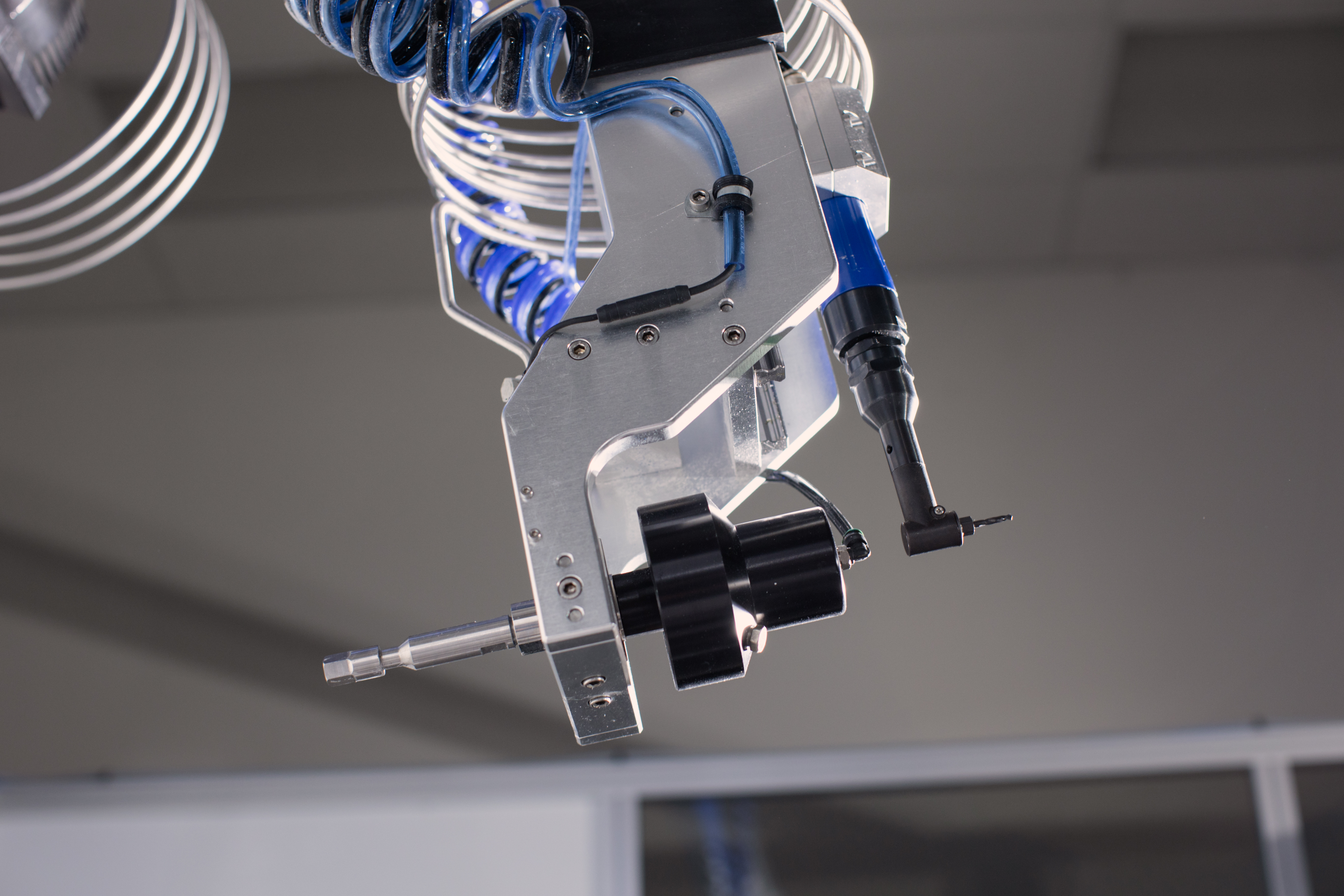
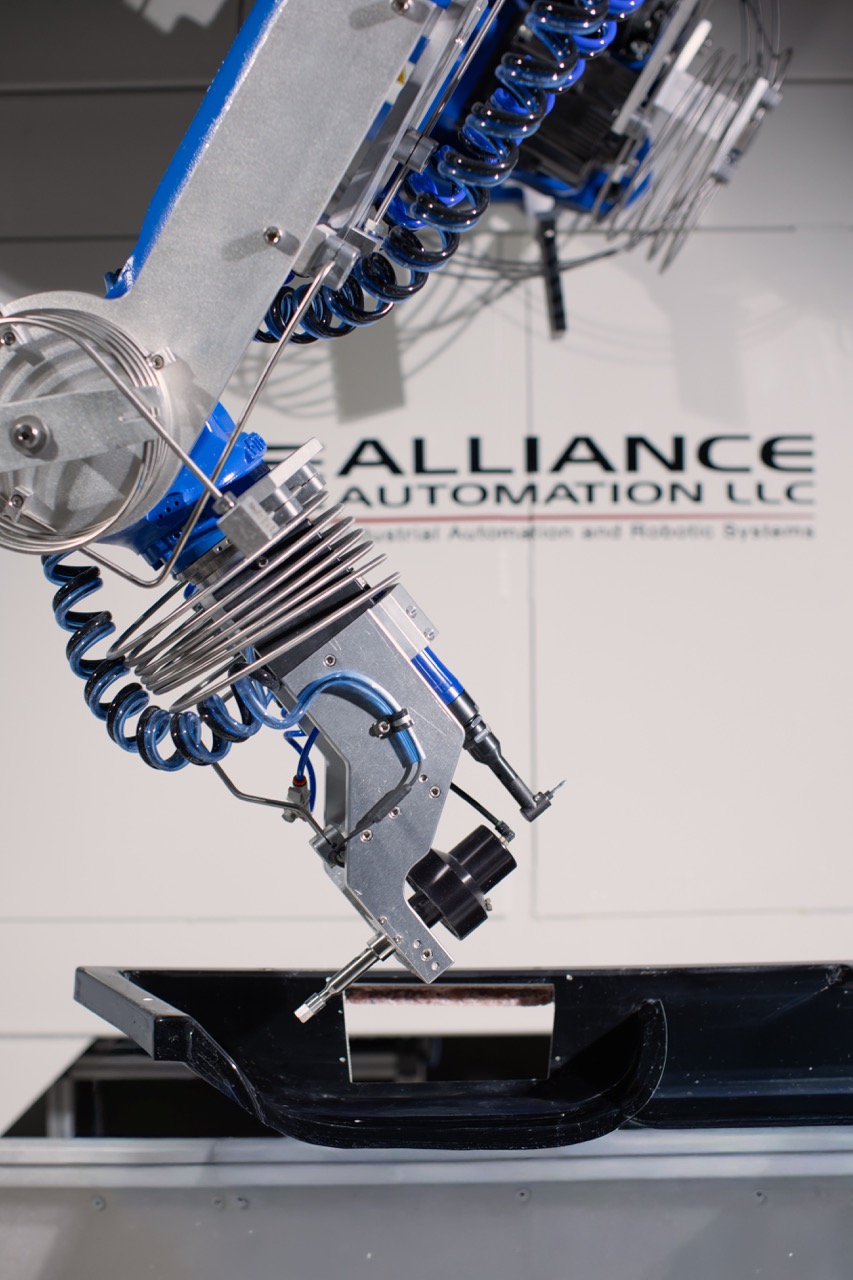
The patented system combines a drilling mechanism and a waterjet cutting nozzle into a single robotic end-of-arm tool. The drill creates a pilot hole before robotic waterjet cutting begins, allowing the waterjet stream to enter the material cleanly without damaging the surrounding surface.
Manufacturers working with fiberglass and composite materials frequently encounter cracking or delamination when initiating a waterjet cutting process. By drilling a pilot hole first, the robotic system allows the waterjet stream to begin cutting through a controlled entry point.
The full patent can be viewed here: https://patents.google.com/patent/US12515355B1
Fiberglass and composite materials are widely used across many industries because of their strength, durability, and resistance to corrosion. These materials are common in:
While composites offer many advantages, they require careful machining processes during manufacturing.
Robotic waterjet cutting is commonly used for trimming composite parts because it avoids heat and can follow complex shapes. Unlike laser or plasma cutting, waterjet cutting does not generate heat that could damage the material.
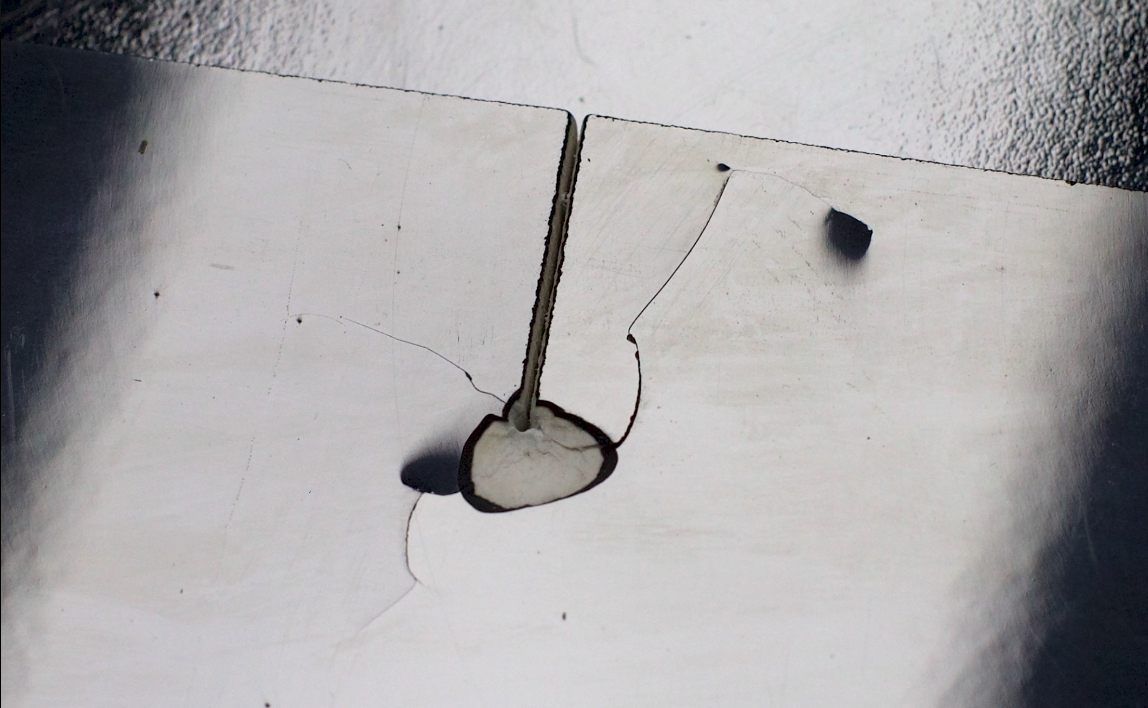
However, initiating a waterjet cut directly on the surface of fiberglass or layered composite materials can create problems.
When the high-pressure water stream strikes the material surface, it can sometimes cause:
These issues are especially noticeable when trimming molded fiberglass parts or laminated composite panels.
For manufacturers producing large volumes of composite components, even minor damage at the start of a cut can lead to rejected parts or additional finishing work.
Alliance Automation developed its robotic waterjet drill to address this challenge.
Instead of starting the cut directly on the surface of the part, the robotic system first drills a small pilot hole into the material. Once the pilot hole is created, the waterjet cutting nozzle begins cutting through that opening.
Starting the cut within the pilot hole allows the waterjet stream to enter the material smoothly rather than impacting the surface layers.
This approach helps prevent cracking and delamination when performing robotic waterjet cutting on fiberglass and composite materials.

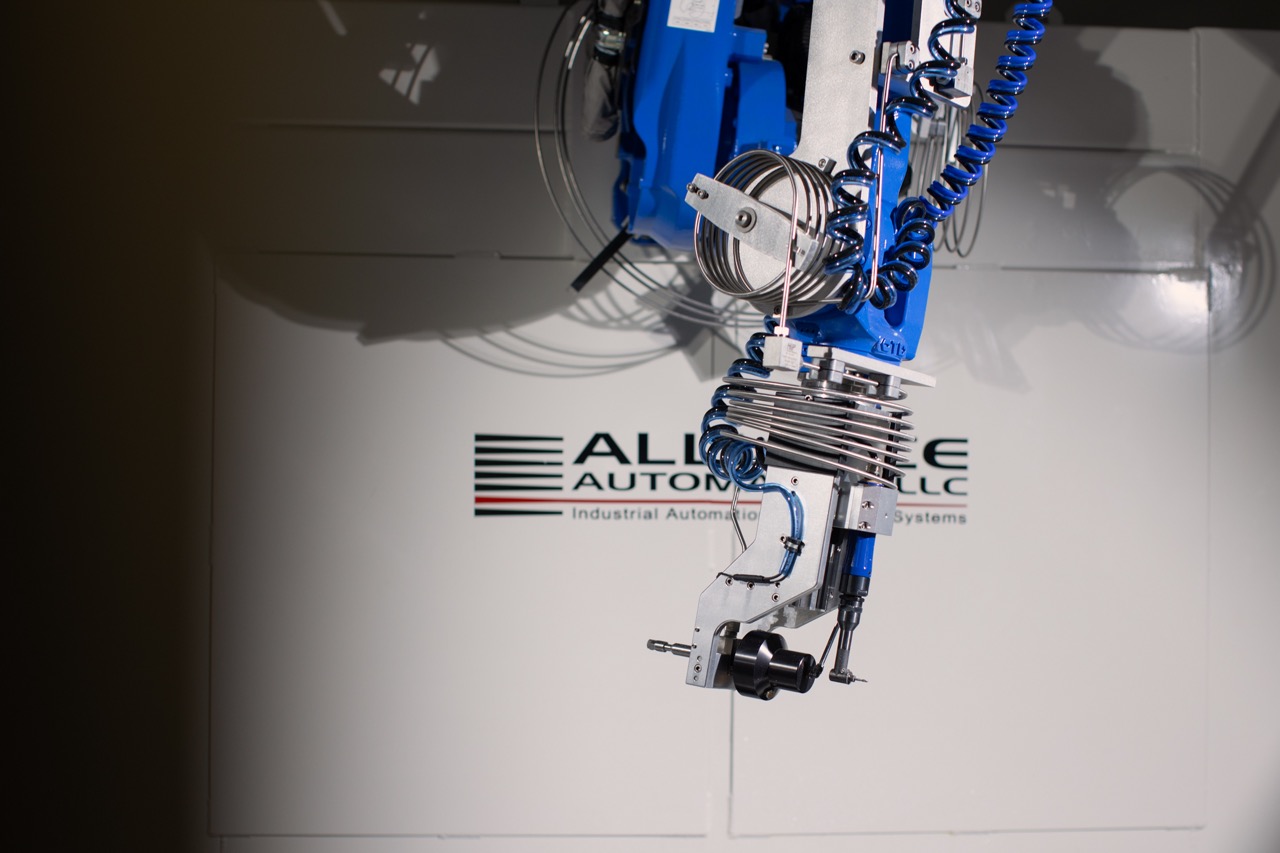
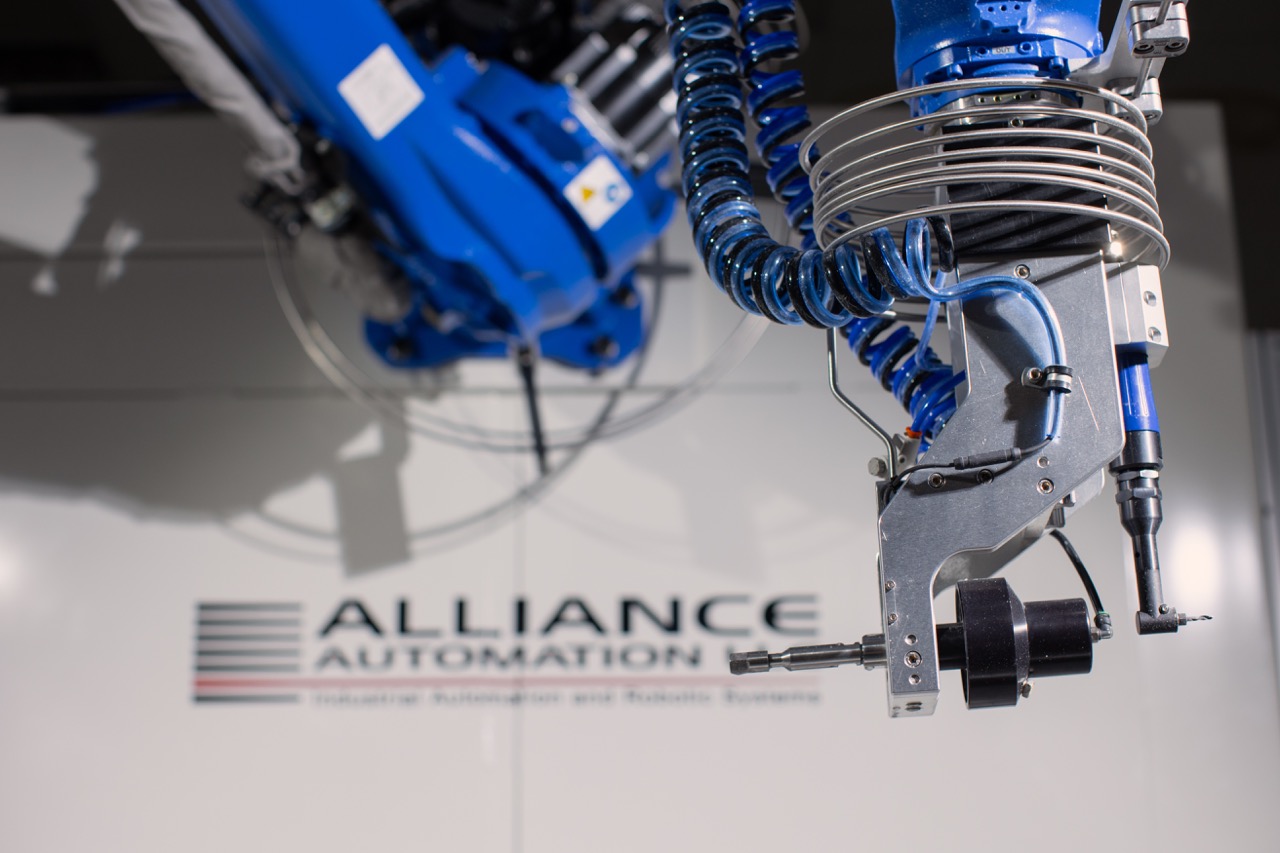
The patented system from Alliance Automation is designed as a robotic end-of-arm tool that integrates both drilling and waterjet cutting.
Instead of using separate machines or tools for drilling and trimming operations, the robot carries a single tool assembly capable of performing both processes.
The tool includes:
During production, the robotic sequence typically follows these steps:
Because the two operations occur within the same robotic cycle, the process remains efficient and repeatable.

The patented system provides several advantages for manufacturers processing fiberglass and composite materials.
Beginning the cut through a pilot hole reduces the likelihood of surface damage. The surrounding composite layers remain intact, producing cleaner edges and more consistent results.
Composite materials consist of multiple bonded layers. Direct impact from a high-pressure waterjet can sometimes separate these layers. A pilot hole minimizes this risk.
Manufacturers producing composite parts at scale often encounter scrap caused by edge defects or cosmetic damage. Starting the waterjet cut through a drilled hole helps reduce these issues.
Because drilling and waterjet cutting occur within the same robotic tool, the process can be completed in a single automated sequence.
Robotic automation ensures that each part is processed using the same programmed motion, improving repeatability and maintaining quality across production runs.
The robotic waterjet drill developed by Alliance Automation is particularly useful in industries that rely heavily on fiberglass and composite materials.
Many automotive interior panels, insulation products, and molded composite components require trimming after molding. Robotic waterjet cutting is widely used for these applications.
Agricultural machinery frequently uses molded fiberglass panels and composite covers. These components must be trimmed precisely after production.
Boat hulls, decks, and structural fiberglass components require accurate trimming while maintaining the integrity of the composite material.
Composite panels used in building systems and infrastructure often require precision cutting during manufacturing.
Aerospace manufacturing relies heavily on advanced composites that must be machined without damaging structural layers.
The robotic waterjet drill is designed to operate on industrial robots used in automated trimming and machining cells.
Robotic systems are commonly used in waterjet cutting applications because they allow manufacturers to process large molded parts and complex shapes that would be difficult to machine using traditional equipment.
By integrating drilling and waterjet cutting into one robotic tool, Alliance Automation has created a system that can be incorporated into both new and existing robotic waterjet cutting systems.
Manufacturers can install the technology within dedicated trimming cells or integrate it into existing robotic production lines.
As fiberglass and composite materials continue to appear in more industrial applications, manufacturers need reliable machining processes that protect the structural integrity of these materials.
Robotic waterjet cutting remains one of the most effective methods for trimming composite parts, but the way a cut begins can affect the final quality of the component.
The robotic waterjet drill developed by Alliance Automation provides a controlled entry point for the waterjet stream, reducing the likelihood of cracking or delamination.
This approach helps manufacturers maintain higher quality standards while keeping automated production processes efficient.

Alliance Automation has extensive experience designing robotic manufacturing systems for a wide range of industries.
The development of this patented robotic waterjet drill reflects the company’s focus on solving practical manufacturing challenges through automation and engineering.
By combining drilling and waterjet cutting into a single robotic tool, Alliance Automation has introduced a solution that improves the reliability and consistency of robotic waterjet cutting for fiberglass and composite materials.
Manufacturers interested in reviewing the patented technology can view the full patent here: https://patents.google.com/patent/US12515355B1
Learn more about how Alliance Automation can help move your business forward.


.svg)
.svg)


.svg)